The Role of Clay Modelling in Enhancing Cognitive Skills for Child Development
- INDRAPRASTHA Noida
- Feb 17
- 3 min read

Clay modelling is more than just a fun activity for children. It plays a significant role in developing various cognitive skills that are essential for a child’s overall growth. When children engage with clay, they are not only creating shapes and figures but also exercising their brains in ways that support learning, problem-solving, and creativity. This post explores how clay modelling enhances cognitive abilities and why it should be an integral part of child development programs.
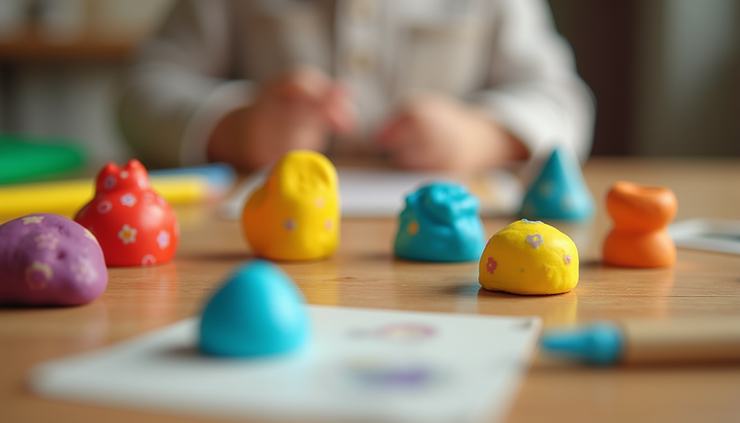
How Clay Modelling Stimulates Cognitive Development
Clay modelling requires children to use their hands and minds simultaneously. This combination helps develop several cognitive skills:
Fine motor skills: Manipulating clay strengthens hand muscles and improves coordination. These skills are crucial for writing and other daily tasks.
Spatial awareness: Children learn to understand shapes, sizes, and dimensions as they mold clay into different forms.
Problem-solving: When a shape doesn’t turn out as expected, children think critically about how to fix or improve it.
Memory and concentration: Following steps to create a specific figure helps improve focus and recall.
Creativity and imagination: Clay offers endless possibilities, encouraging children to think outside the box and express themselves.
Specific Cognitive Skills Enhanced by Clay Modelling
1. Attention and Focus
Working with clay demands sustained attention. Children must concentrate on shaping the material, which helps lengthen their attention span. This skill transfers to academic tasks where focus is essential.
2. Planning and Sequencing
Creating a clay model often involves planning the steps ahead. For example, a child might decide to build a house by first making the walls, then the roof, and finally adding details like windows. This process teaches sequencing, an important cognitive skill for organizing thoughts and actions.
3. Visual and Tactile Learning
Clay modelling combines visual and tactile experiences. Children see the shapes they create and feel the texture of the clay. This multisensory approach supports better understanding and retention of concepts.
4. Language Development
Describing their creations or explaining the process helps children develop vocabulary and communication skills. Talking about shapes, colors, and textures enriches their language use.
Why Clay Modelling Should Be Part of Child Development Programs
Integrating clay modelling into early education offers several benefits:
Supports diverse learning styles: Children who learn best through hands-on activities benefit greatly from clay work.
Encourages emotional expression: Clay can be a medium for children to express feelings they might not yet have words for.
Builds confidence: Successfully creating a model boosts self-esteem and motivates children to try new challenges.
Promotes social skills: Group clay activities foster cooperation, sharing, and communication.
Practical Ways to Include Clay Modelling in Child Development
Parents and educators can easily incorporate clay modelling into daily routines:
Set up a dedicated space with clay and simple tools.
Encourage free play with clay to stimulate creativity.
Introduce guided projects like making animals, vehicles, or letters.
Use clay modelling to reinforce lessons in math (shapes, counting) and science (textures, materials).
Organize group activities to build teamwork skills.
Examples of Cognitive Growth Through Clay Modelling
Consider a child learning to make a clay flower. They must:
Visualize the flower’s shape (spatial awareness).
Roll and shape petals (fine motor skills).
Arrange petals in order (sequencing).
Describe the flower’s parts (language skills).
This simple activity touches on multiple cognitive areas, showing how clay modelling supports broad development.
Encouraging Clay Modelling at Home and School
To maximize benefits, adults should:
Provide positive feedback to encourage effort.
Allow children to explore without strict rules.
Introduce new techniques gradually.
Combine clay modelling with storytelling or other creative arts.
This approach makes learning enjoyable and effective.


Comments